 Eco-Organic Carpet Cleaning
How do you clean upholstery the right way?
Cleaning upholstery the right way means checking the tag, vacuuming thoroughly, testing the cleaner on a hidden spot, and using as little moisture as the fabric allows. Rushing any of these steps is how people end up with water rings, shrunken cushion covers, or color that bleeds.
Start by vacuuming every surface, including under the cushions and along the seams, with an upholstery attachment. Dry soil left in the fabric turns to mud once you add moisture, so this step matters more than most people expect.
Next, test your cleaner on a spot nobody sees, such as the back or underside of the sofa. Press a white cloth on it and look for color on the cloth after it dries. If the color moves or the fabric changes texture, stop and call a professional.
What do the upholstery cleaning codes W, S, WS, and X mean?
The cleaning code on the tag tells you what is safe to use. W means water-based cleaners, S means solvent-based (dry cleaning) products only, WS means either works, and X means no liquid cleaning at all, only vacuuming or light brushing.
The tag is usually under a seat cushion or on the underside of the frame. Using water on an S fabric can leave rings and stiffen the fabric, while using solvent on some W fabrics can damage the finish.
Many couches have no tag at all, or a tag that has worn off. In that case, a professional will usually test the fabric first and pick a gentle method. Natural fibers like silk, velvet, and some linens are more delicate than synthetic microfiber and need extra care.
What are the methods for cleaning upholstery?
The main professional methods are hot water extraction (often called steam cleaning), low-moisture or bonnet cleaning, and dry solvent cleaning. Each fits different fabrics and levels of soiling.
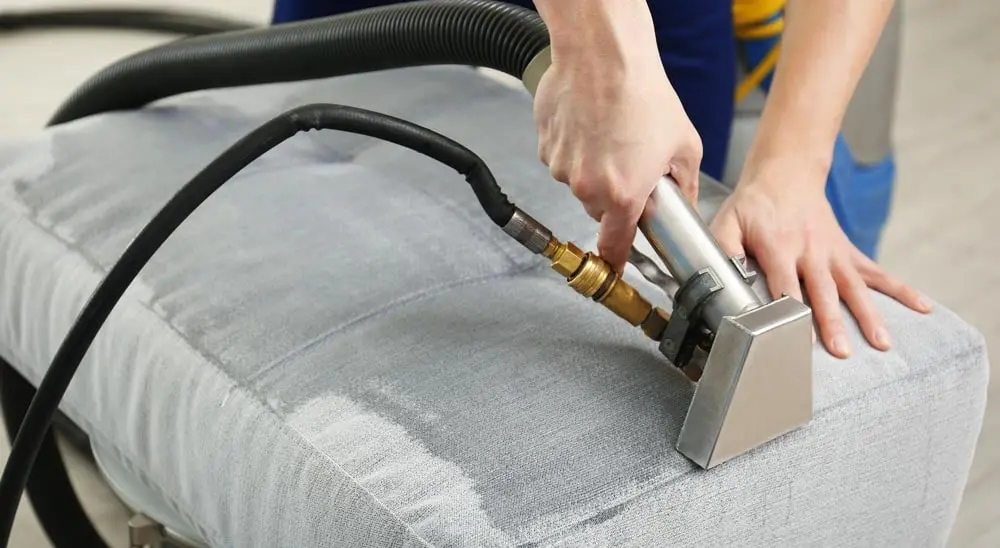
Hot water extraction sprays a cleaning solution into the fabric and pulls it back out with strong suction, which removes deep soil and works well on heavily used couches in W or WS fabrics. The trade-off is longer drying time, often several hours to a day, so airflow helps.
Low-moisture methods use less water and dry faster, which suits delicate fabrics and lightly soiled pieces. They may not lift deep, set-in grime as well. Dry solvent cleaning is the choice for S-coded fabrics, since it avoids water entirely.
How often should upholstery be cleaned?
A good rule is every 12 to 24 months for typical households, and every 6 to 12 months for homes with pets, young children, smokers, or allergy sufferers. Pieces used daily, like a family-room sofa, collect more oils and soil than a formal chair.
Vacuum weekly to slow buildup, and treat spills quickly by blotting, never rubbing. Rubbing pushes the spill deeper and can fuzz the fabric.
In the Chicago area, winter keeps windows closed and heat running for months, so dust, dander, and tracked-in salt and grit tend to settle into fabric. Cleaning in late fall or after the heating season is a sensible time to reset.
Should you clean upholstery yourself or hire a professional?
For a small, fresh spill on a W or WS fabric, doing it yourself is fine. For whole-sofa cleaning, set-in stains, pet odors, or delicate fabrics, a professional usually gets better results with less risk.
Rental machines and store-bought sprays often leave too much moisture and soap residue behind. Residue attracts dirt, so the couch can look dirty again quickly, and too much water can lead to musty smells or browning on the fabric.
A professional has stronger extraction equipment, fabric-appropriate products, and the experience to spot problems before they happen. It costs more than a bottle of spray, but it avoids the cost of replacing a ruined piece.
How much does upholstery cleaning cost?
Eco-Organic Carpet Cleaning is based in Wheeling, IL, and cleans upholstery for homes in Wheeling and nearby towns. Our approved upholstery cleaning range is $55 to $129, depending on the piece.
In general, price depends on size, fabric, and condition. A single chair costs less than a large sectional, and heavy staining or pet odor may need extra treatment. Asking for a quote based on the number of pieces and fabric type is the most reliable way to know the cost before work begins.
Questions we hear
Can you steam clean any couch?
No. Steam or hot water extraction is safe for W and WS fabrics, but not for S or X codes. Check the tag first, and have a professional test the fabric if the tag is missing.
How long does upholstery take to dry after cleaning?
Typically a few hours to a full day, depending on the fabric, the method, and airflow. Running a fan, opening a window, or running the furnace fan helps speed it up.
Does upholstery cleaning remove pet odors?
It can remove many odors when the source is in the fabric surface. If urine has soaked into the cushion foam, it may need a specialized treatment, and results vary with how long it has been there.
Is it worth cleaning upholstery regularly?
Yes. Regular cleaning removes oils, dust, and allergens, and it helps fabric wear more slowly. Dirt acts like fine sandpaper on fibers, so cleaner furniture tends to last longer.
What should I do before the cleaner arrives?
Vacuum the furniture, remove cushions and loose items, and point out any stains and what caused them. Knowing what spilled helps the cleaner choose the right treatment.